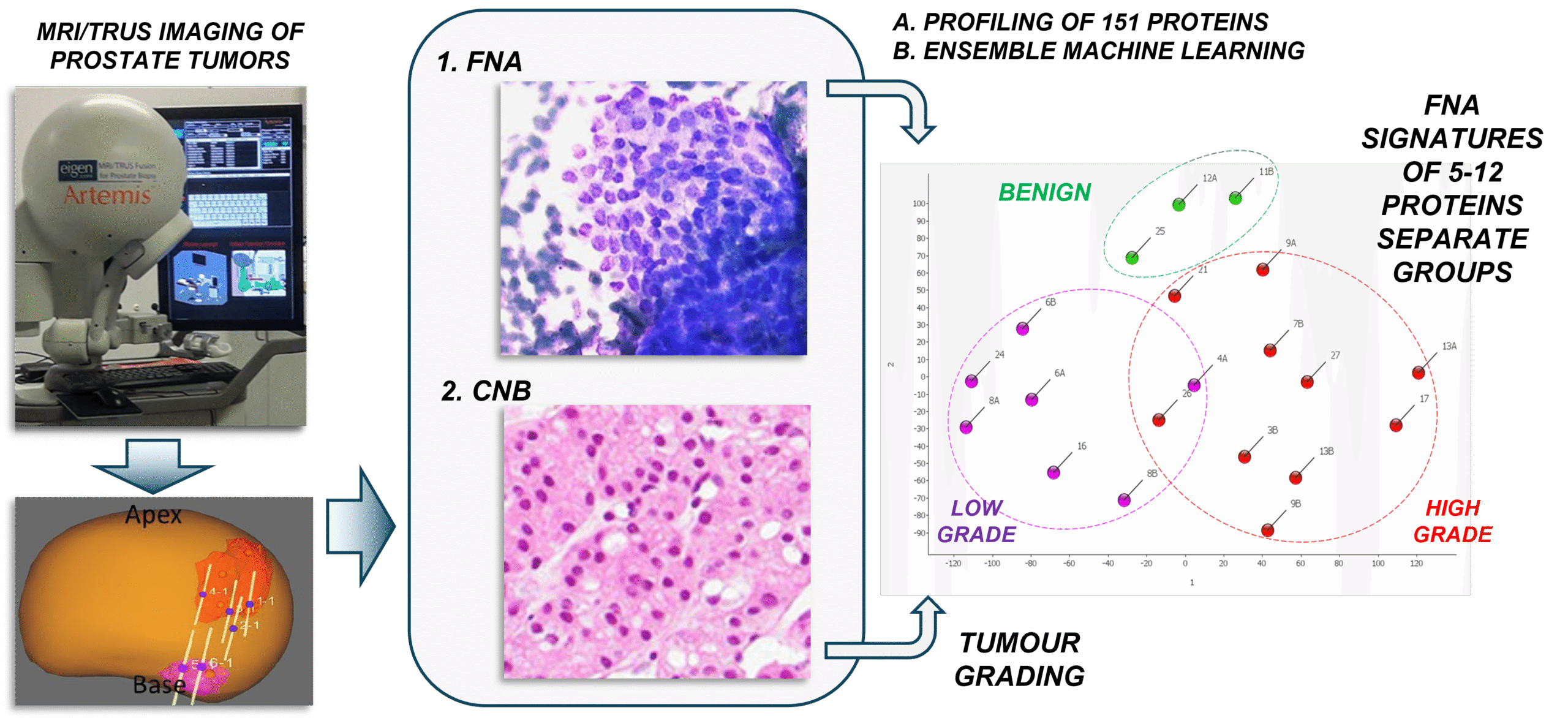
Multiplex protein analysis and ensemble machine learning methods of fine needle aspirates from prostate cancer patients reveal potential diagnostic signatures associated with tumour grade
Pontus Röbeck, Bo Franzén, Rafaele Cantera-Ahlman, Anca Dragomir, Gert Auer, Håkan Jorulf, Sven P Jacobsson, Kristina Viktorsson, Rolf Lewensohn, Michael Häggman, Sam Ladjevardi
Published in Cytopathology 2023
A proof-of-concept strategy for combining fine-needle aspirate (FNA) sampling with multi-omics profiling and AI-driven analytics to improve cancer diagnostics and treatment prediction.
FNA Sampling
A minimally invasive technique that enables repeated sampling of tumors, reducing patient risk compared to core biopsies. Using proximity extension assay (PEA), hundreds of proteins and actionable targets can be analyzed from a single FNA sample.
AI and Machine Learning
Advanced models such as XGBoost, Random Forest, PLS regression, and logistic regression are applied to identify biomarker signatures linked to tumor grade.
- Ensemble Strategy: Combines multiple algorithms to improve robustness in small cohorts.
- Explainable AI (SHAP): Provides transparency in feature importance for clinical interpretation.
Feature Selection & Oversampling
Techniques like Boruta, BorutaShap, and SMOTE address high-dimensionality and class imbalance, enhance the probability for reliable biomarker nomination.
Network Analysis
Functional interaction mapping validates biological relevance of nominated biomarkers, linking them to pathways such as EMT, apoptosis, and immune signaling.
Clinical Impact
Enables prediction of disease severity, identification of immunotherapy targets, and rational combination strategies for resistant tumors.