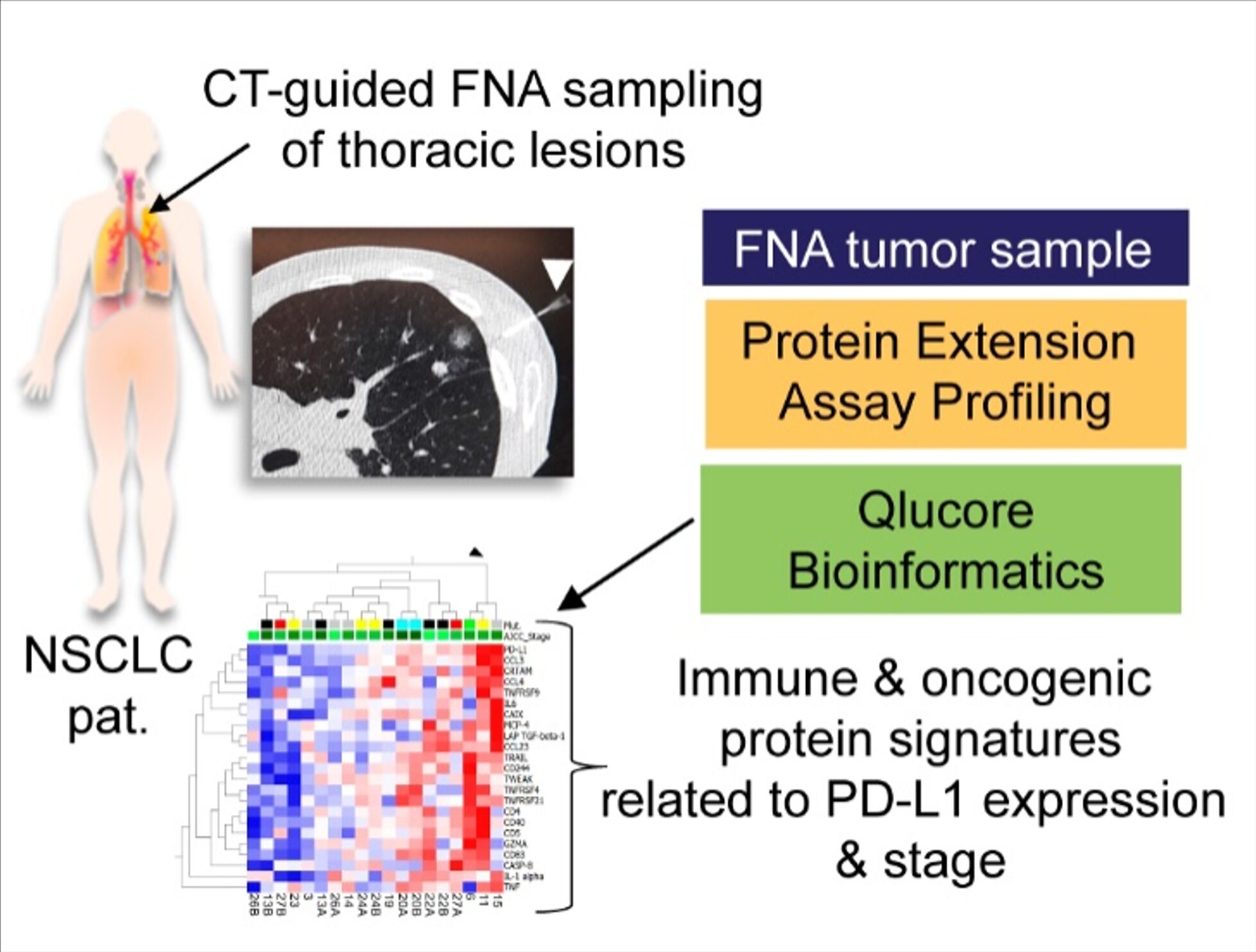
Multiplex immune protein profiling of fine-needle aspirates from patients with non-small-cell lung cancer reveals signatures associated with PD-L1 expression and tumor stage
Bo Franzén, Kristina Viktorsson, Caroline Kamali, Eva Darai-Ramqvist, Vitali Grozman, Vasiliki Arapi, Petra Hååg, Vitaliy O Kaminskyy, Per Hydbring, Lena Kanter, Sven Nyrén, Simon Ekman, Luigi De Petris, Rolf Lewensohn
Published in Mol Oncol. 2021
FNA and AI-Ready Multi-Omics for Lung Cancer
Minimally Invasive Tumor Sampling
Fine-needle aspiration (FNA) enables safe, repeatable sampling of lung tumors with minimal trauma risk. This approach is ideal for longitudinal monitoring and precision diagnostics in NSCLC.
High-Sensitivity Protein Profiling
Using proximity extension assay (PEA), researchers profiled over 160 immune and tumor-related proteins from tiny FNA samples. PD-L1 was detected in all cases, even when IHC or ICC showed negative results, demonstrating PEA’s superior sensitivity.
Immune Checkpoint-Related Signatures
Protein markers such as CD73, CD4, CD5, CCL3, and CCL23 were significantly correlated with PD-L1 expression. These signatures reflect the presence and activity of various immune cell populations within the tumor microenvironment.
Tumor Stage-Associated Biomarkers
Stage-related protein signatures included LAG3, IL12RB1, and CXCL10, which were more abundant in advanced NSCLC. These markers may help characterize tumor progression and guide treatment decisions.
Capturing Tumor Heterogeneity
FNA-based profiling revealed intratumoral heterogeneity, with distinct protein patterns between central and peripheral tumor regions. This reflects differences in immune cell composition and signaling, supporting personalized immunotherapy strategies.